


Vildagliptin (Galvus®)

Drug class: DPP-4 Inhibitor
Mechanism of Action
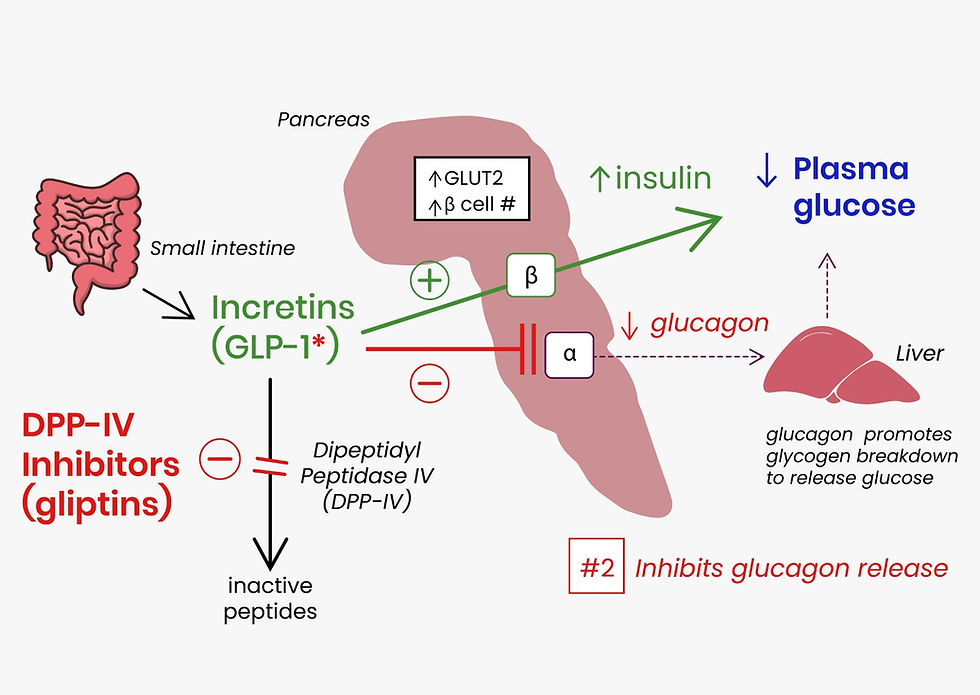
Vildagliptin is an orally active, highly selective, and reversible dipeptidyl peptidase-4 (DPP-4) inhibitor designed to manage type 2 diabetes mellitus. Vildagliptin blocks the breakdown of incretin hormones, which prompts the pancreas to release more insulin when blood glucose is high and reduces liver sugar production. This elevation stimulates glucose-dependent insulin secretion from pancreatic beta cells while suppressing inappropriate glucagon release from alpha cells (1).
Approved Indications
Treatment of type 2 diabetes mellitus in adults to improve glycemic control as an adjunct to diet and exercise (2)
Dosage and Administration
When used as monotherapy, or in combination with metformin, thiazolidinedione, metformin plus a sulphonylurea, or insulin (with or without metformin), the recommended daily dose of vildagliptin is 100 mg, administered as 50 mg in the morning and 50 mg in the evening (3).
In dual combination with a sulphonylurea, the recommended dose is 50 mg once daily in the morning. In this setting, vildagliptin 100 mg daily offers no additional benefit over 50 mg once daily (3).
When combined with a sulphonylurea, a lower sulphonylurea dose may be considered to reduce the risk of hypoglycaemia (3).
Key clinical benefits
Improves glycemic control (4)
Effectively decreases HbA1c with a low risk of hypoglycemia and is Weight neutral (4)
Preserves β-cell function, reduces total cholesterol, decreases fasting lipolysis in adipose tissue, and triglyceride storage in non-fat tissues (4)
Well tolerated with low incidence of adverse events (4)
Does not increase the risk of Cardiovascular and cerebrovascular events (4)
Key clinical trials
The VERIFY trial
The VERIFY trial was a 5‑year, randomized, double‑blind study across 254 centers in 34 countries, evaluating early combination therapy with vildagliptin 50 mg twice daily plus metformin versus metformin monotherapy in newly diagnosed type 2 diabetes patients (HbA1c 6.5–7.5%, BMI 22–40 kg/m²). The primary endpoint was time to initial treatment failure, defined as HbA1c ≥7.0% at two consecutive visits. Results showed that early combination therapy reduced the risk of treatment failure by 49% (HR 0.51, 95% CI 0.45–0.58; p<0.0001) compared to metformin alone. Secondary analysis demonstrated a 26% lower risk of secondary failure (HR 0.74, 95% CI 0.63–0.86; p<0.0001), with patients maintaining HbA1c below 7.0% more consistently over 5 years. Safety outcomes were favorable, with adverse events comparable to placebo and no unexpected signals (5).
The EDGE trial
This was a large, real‑world observational study designed to evaluate the effectiveness and tolerability of vildagliptin as a second‑line therapy in type 2 diabetes. Conducted across nearly 3,000 physicians and involving over 45,000 patients worldwide, the study compared vildagliptin add‑on therapy with other oral antidiabetic drugs in patients inadequately controlled on monotherapy. The key findings showed that vildagliptin achieved superior glycemic control, with a greater proportion of patients reaching HbA1c targets without hypoglycemia, weight gain, edema, or gastrointestinal side effects. Specifically, 35% of patients on vildagliptin achieved HbA1c <7% without hypoglycemia or significant weight gain, compared to 23% in the comparator group. Overall, vildagliptin demonstrated better tolerability, fewer adverse events, and a favorable safety profile consistent with prior randomized trials, reinforcing its role as an effective and safe add‑on therapy in routine clinical practice (6).
The GALIANT trial
This was a randomized, open‑label study conducted in primary care settings to compare vildagliptin with thiazolidinediones (TZDs) as add‑on therapy to metformin in patients with type 2 diabetes inadequately controlled on metformin alone. Over 12 weeks, more than 2,400 patients were randomized to receive either vildagliptin 100 mg daily or a TZD of the investigator’s choice. The trial demonstrated that vildagliptin was non‑inferior to TZDs in reducing HbA1c, with mean reductions of −0.68% for vildagliptin versus −0.57% for TZDs. Importantly, vildagliptin was associated with a modest weight loss (−0.58 kg) compared to weight gain (+0.33 kg) in the TZD group, highlighting a key clinical advantage. Safety outcomes were comparable between groups, with adverse events occurring in roughly 39–40% of patients, and no unexpected signals. Overall, the GALIANT trial confirmed that vildagliptin provides similar glycemic efficacy to TZDs but with a more favorable weight profile and good tolerability, supporting its role as an effective second‑line option in type 2 diabetes management (7).
The PRIME‑Vilda trial
This study compared vildagliptin sustained‑release (100 mg once daily) with sitagliptin (100 mg once daily) in 128 patients inadequately controlled on metformin. Over 84 days, both treatments produced comparable reductions in HbA1c (−0.22%), fasting glucose (−1.43 mg/dL), postprandial glucose (+2.55 mg/dL), and average glucose by CGMS (−19.14 mg/dL). Vildagliptin SR was well tolerated and offered the added advantage of once‑daily dosing convenience, supporting better patient compliance while maintaining effective glycemic control (8).
Common Adverse Events
The most common adverse events with vildagliptin are generally mild and include headache, nasopharyngitis (common cold), cough, dizziness, constipation, and gastrointestinal discomfort. More serious but less frequent events include liver enzyme elevations, rare hepatic dysfunction, and hypoglycemia when combined with sulphonylureas (3).
Contraindications/Precautions
Vildagliptin (Galvus) is contraindicated in patients with type 1 diabetes, diabetic ketoacidosis, severe hepatic impairment, and during pregnancy or breastfeeding. Precautions include monitoring liver function, using caution in renal impairment, history of pancreatitis, and reducing sulphonylurea dose to lower hypoglycemia risk (3).
Special notes for the clinician
Vildagliptin is generally well tolerated, but clinicians should monitor liver function regularly, adjust doses in renal impairment, and remain alert for rare pancreatitis signals. Hypoglycemia risk is minimal unless combined with sulphonylureas or insulin, in which case sulphonylurea dose reduction may be needed. Its weight‑neutral profile and proven durability in early combination with metformin make it a valuable option, provided patients adhere to the twice‑daily regimen and are counseled on reporting unexplained abdominal pain (3).

Abbreviations
EDGE: Effectiveness of Diabetes control with vildaGliptin and vildagliptin/mEtformin;DPP-4 inhibitor: dipeptidyl peptidase-4 inhibitor; FGM: flash glucose monitoring; LVEF: Left Ventricular Ejection Fraction; VIVID: Vildagliptin in Ventricular Impaired Dysfunction Diabetes; VERIFY: Vildagliptin Efficacy in combination with metfoRmIn For early; NYHA- New York Heart Association; ALT: Alanine Aminotransferase; AST: Aspartate Aminotransferase; ULN: upper limit of normal; GALIANT: Galvus in Addition to Metformin versus LowerIng HbA1c with New Thiazolidinedione/Metformin.
References
Liu D, Jin B, Chen W, Yun P. Dipeptidyl peptidase 4 (DPP-4) inhibitors and cardiovascular outcomes in patients with type 2 diabetes mellitus (T2DM): a systematic review and meta-analysis. BMC Pharmacol Toxicol. 2019 Mar 4;20(1):15.
Kong D, Shen Z, Jiang L, Xie X, et al. The effects of vildagliptin on glycemic variability in patients with type 2 diabetes on premixed insulin therapy. Front Endocrinol (Lausanne). 2025 Jun 20;16:1508918.
Summary of product characteristics. Available at: https://ec.europa.eu/health/documents/community-register/2015/20151216133541/anx_133541_en.pdf Accessed on 8 September, 2026
Pan C, Wang X. Profile of vildagliptin in type 2 diabetes: efficacy, safety, and patient acceptability. Ther Clin Risk Manag. 2013;9:247-57.
Matthews DR, Paldánius PM, Proot P, Chiang Y, Stumvoll M, Del Prato S; VERIFY study group. a 5-year, multicentre, randomised, double-blind trial. Lancet. 2019 Oct 26;394(10208):1519-1529.
Mathieu C, Barnett AH, Brath H, et al. Effectiveness and tolerability of second-line therapy with vildagliptin vs. other oral agents in type 2 diabetes: a real-life worldwide observational study (EDGE). Int J Clin Pract. 2013 Oct;67(10):947-56.
Otterbeck PE, Banerji MA. The efficacy and safety of vildagliptin in the GALIANT trial: chronic kidney disease and other applications. Expert Rev Endocrinol Metab. 2011 Mar;6(2):143-151.
ZARGAR, Abdul Hamid et al. Patient-centered Assessment of the Efficacy and Safety of Vildagliptin Sustained-release Tablet (100 mg) Relative to Sitagliptin (100 mg) in Patients with Type 2 Diabetes Mellitus Inadequately Controlled on MEtformin (PRIME-Vilda Trial). Medical Research Archives , [S.l.], v. 13, n. 5, may 2025. Available at: https://esmed.org/MRA/mra/article/view/6599 Accessed on 8th September 2026.
About the Author
Ms. Vidyashree Kalyani holds an M.Sc. in Bioinformatics and is passionate about medical and scientific writing. She specializes in transforming complex biomedical research into clear, evidence‑based content. Her professional interests span genomics, precision medicine, AI in healthcare, and translational research. Committed to scientific accuracy and effective communication, she strives to create impactful content that bridges research, clinical practice, and healthcare innovation.
Disclaimer
The content published on this platform has been developed by independent medical writers from diverse healthcare backgrounds, including members of the MedWriters Alumni Network. While every effort has been made to ensure accuracy, the authors, Rxnews team, partners, agents, and sponsors accept no responsibility for errors, omissions, or inaccuracies in this article, whether due to negligence or otherwise, nor for any consequences arising from its use. Inclusion or exclusion of any product does not imply endorsement or rejection by the publisher. For complaints or feedback, please write to contact@rxnews.in


Comments